It will launch alongside the Galaxy S8+, a larger model that’s expected to come with many of the same features and specifications.
Here’s everything you need to know about the Samsung Galaxy S8 ahead of its release.
Design
2017 appears to be the year that ‘bezel-less’ smartphone design goes mainstream, with LG and Sony having already embraced the trend. Samsung looks set to follow, with leaked images showing off a handset with a front panel that’s almost entirely screen.
The regular Galaxy S8 will feature a 5.8-inch, 2,960 x 1,440 display, while the larger Galaxy S8+ will use a 6.2-inch screen with the same resolution.
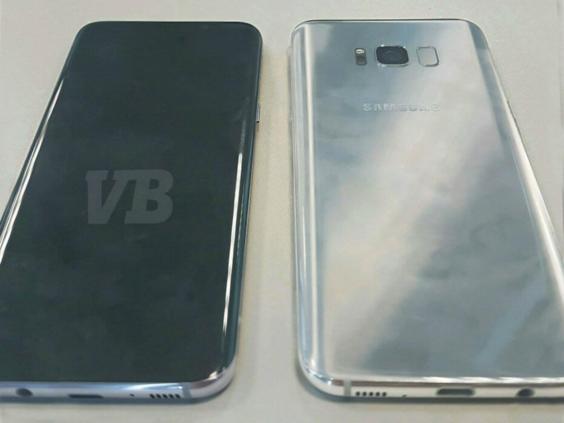
In order to keep the handsets relatively compact, Samsung has decided to ditch the home button, and the company’s branding will only feature on the back panel. The logo will sit below the the rear camera and potentially problematically placed fingerprint scanner.
It appears to be positioned abnormally high up on the phone’s rear panel, potentially making it uncomfortable to reach, especially for users with small hands. Its off-centre placement – to the right of the camera sensor – could also favour right-handed users more than left-handed users.
Leaks suggest the phones will be available in black, silver and violet colour schemes.
Features
One of the S8’s most notable rumoured features is Bixby, a new multilingual AI assistant said to be capable of recognising text and real-world objects through the Galaxy S8’s camera and tracking them down online, allowing users to make quick purchases.
It’s also expected to run the latest version of Android Nougat, and feature IP68 dust- and water-resistance, expandable storage through a microSD port and a security-focused iris scanner.
The S8’s predecessors are widely recognised as some of the best smartphones for photography on the market, and we fully expect Samsung’s new flagship to deliver once again.
Both the S8 and S8+ are expected to use a 12-megapixel rear camera and an 8-megapixel selfie camera. That’s not much of a change from the S7, which uses a 12-megapixel primary sensor and a 5-megapixel front-facing camera, but if it ain’t broke don’t fix it.
Battery
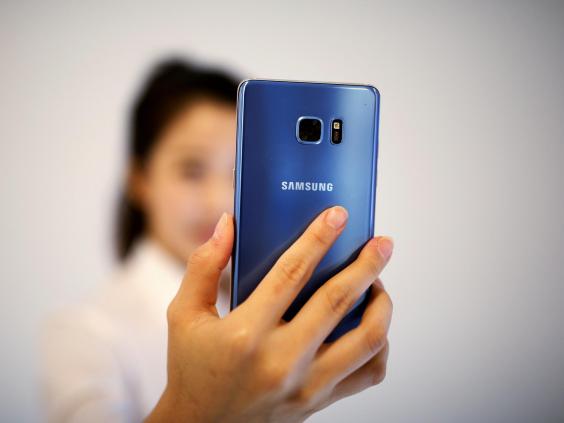
Recent Samsung conferences have kicked off with apologies for the disastrous Note 7, and the Galaxy S8 launch will almost certainly begin in the same manner.
A 3,000mAh battery is rumoured to be powering the S8, with an enlarged 3,500mAh battery squeezed inside the S8+. Samsung has also made a big deal about its new eight-point battery safety process, which it hopes will be enough to help it regain consumers’ trust.
(VentureBeat)
Launch and release
The Galaxy S8 had been expected to launch at Mobile World Congress last month, but Samsung decided to push proceedings back because of the Note 7 situation. It will instead be revealed at an event on 29 March.
Samsung hasn’t mentioned release dates yet, but multiple leaks have pointed at 21 April. However, a recent report claims that Samsung has, once again, delayed its plans, with a 28 April release date now being spoken of.
The company will announce pricing later this month, but early speculation suggests the S8 will cost £799, with the Galaxy S8+ priced at £899, making them two of the most expensive mobiles on the market.
Two of the three co-founders of The Pirate Bay— Fredrik Neij and Gottfrid Svartholm Warg —have been ordered by a Finnish court to pay record labels $477,800 in compensation for copyright infringement on the site. Last year in a similar case, Helsinki District Court in Finland ordered Peter Sunde , the third co-founder of The Pirate Bay, to pay nearly $395,000 (350,000 Euros) in damages to several major record labels, including Sony Music, Universal Music and Warner Music. However, Sunde did not pay any penalty yet, and instead, he later announced his plans to sue those record labels for defamation. The Pirate Bay is still the world's most popular torrent website that has proven to be an elusive hub for illegal copyrighted contents, even after a series of raids and shutdown of its multiple domains , including the primary .SE domain. All the three co-founders of The Pirate Bay were facing criminal copyright infringeme...
If you came across any Facebook message with a video link sent by anyone, even your friend — just don’t click on it. Security researchers at Kaspersky Lab have spotted an ongoing cross-platform campaign on Facebook Messenger, where users receive a video link that redirects them to a fake website, luring them to install malicious software. Although it is still unclear how the malware spreads, researchers believe spammers are using compromised accounts, hijacked browsers, or clickjacking techniques to spread the malicious link. The attackers make use of social engineering to trick users into clicking the video link, which purports to be from one of their Facebook friends, with the message that reads "< your friend name > Video" followed by a bit.ly link, as shown. Here's How this Cross-Platform Malware Works: The URL redirects victims to a Google doc that displays a dynamically generated video thumbnail, like a playable movie, based on the sender...
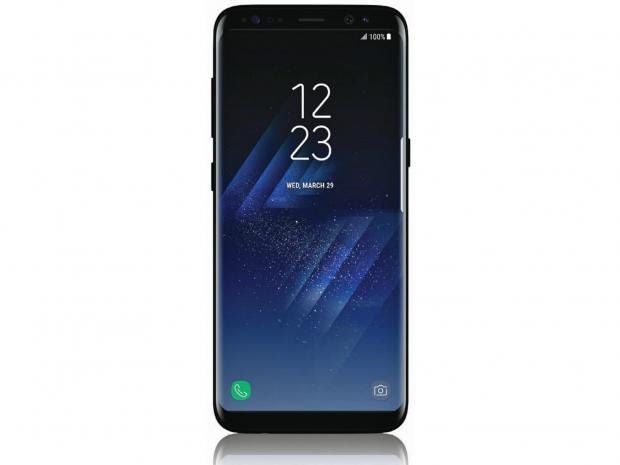 One of the biggest events in the tech calendar is set to take place later this month, with Samsung belatedly preparing to unveil its new flagship smartphone, the Galaxy S8.
It will launch alongside the Galaxy S8+, a larger model that’s expected to come with many of the same features and specifications.
Here’s everything you need to know about the Samsung Galaxy S8 ahead of its release.


Comments
Post a Comment